How the Internet of Things (IoT) is Shaping the Future of Software
The term IoT defines the network of physical devices, vehicles, home appliances, and other items that are embedded with sensors, software, and other technologies for the purpose of connecting and exchanging data with other devices over the Internet. Thus, it constitutes an ecosystem in which actionable information and services are generated. Applications range from smart homes to industrial usage, enabling automation, real-time decision-making, and efficiency.
In this blog, we will explore how the Internet of Things (IoT) is shaping the future of software development, the technologies driving these changes, and the industries being impacted by them. We’ll also delve into the challenges developers face when creating software for IoT devices and examine emerging trends that will shape the future of IoT and software.
Importance of IoT in Today’s World
The significance of IoT simply cannot be overestimated because, with an increased number of devices, the opportunities for new applications and services grow exponentially. In today’s world, software plays a critical role in making IoT devices work seamlessly. This ability to collect, process, and act upon data from these devices is redefining how we interact with technology, enhancing business operations and improving user experiences. IoT is at the very center of the digital transformation and, as such, must be an important part of the future of software.
The IoT Ecosystem and Its Impact on Software Development
Overview of IoT Ecosystem
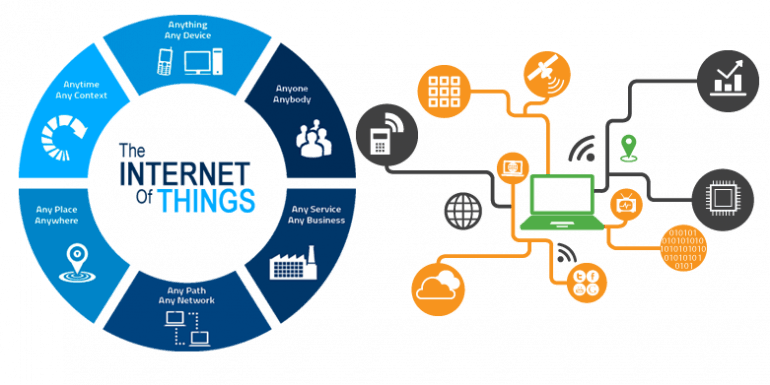
These IoT ecosystems comprise sensors, devices, connectivity networks, cloud platforms, and the software that helps to make this ecosystem work in a harmonious manner. Sensors collect data, relaying it to the cloud or edge computing systems for processing and action. This ecosystem of software at the heart of the IoT drives innovation in many sectors, from healthcare and manufacturing to agriculture.
Influence of IoT on Software Development Lifecycle
The IoT software development lifecycle is very different from the traditional software development lifecycle. Key differences include integration of hardware with software, real-time data processing, and management of device communications. It has to manage a huge amount of data and must be capable of providing real-time insights for intelligent decision-making. A developer should also consider the diversity of IoT devices, the operating environment, and the need for software to run efficiently on resource-constrained devices.
The Role of Data in IoT-driven Software
Data is the lifeblood of any IoT application. It is gathered through sensors in real time, analyzed, and used to trigger actions or provide insights. The IoT software is responsible for managing this data flow and making sure that it is processed efficiently and securely. Large-scale integration of big data analytics with machine learning algorithms within IoT solutions provides an opportunity for creating smarter systems that could predict and optimize outcomes.
Key Technologies Driving IoT and Software Innovation
Artificial Intelligence and Machine Learning
IoT evolution centers on artificial intelligence and machine learning. These technologies enable devices to learn from data, make independent decisions, and perform optimizations with no human intervention needed. Example applications of this could be AI-powered software analyzing sensor data from smart homes to automatically adjust temperature or lighting levels to maintain energy efficiency.
Cloud Computing and Edge Computing
Cloud computing offered a scalable platform for IoT applications to store and analyze a large amount of data. However, edge computing is being increasingly adopted as a complementary technology to enable processing of data closer to its source, leading to low latency and bandwidth usage. This is an important turn, especially in the use cases where this becomes vital, such as autonomous vehicles or real-time healthcare monitoring systems.
Big Data Analytics
It goes without saying that such volumes from IoT devices necessitate strong big data analytics. Big data tools help process and analyze large volumes of data to obtain actionable insights from them. IoT software is increasingly integrating big data technologies to manage, store, and process data in real time, enabling smarter, data-driven decision-making across industries.
Blockchain in IoT
Blockchain technology provides a secure and transparent way to manage IoT data and transactions. It can help address security concerns, such as data integrity and unauthorized access, by creating immutable records of the transactions. Blockchain’s decentralized nature eliminates single points of failure, making IoT networks resilient.
Connectivity Technologies: 5G, Wi-Fi, and LPWAN
Connectivity is considered the backbone of IoT devices. Starting from 5G networks to Wi-Fi and Low Power Wide Area Networks (LPWAN), all are bringing a revolution to IoT by offering faster, more reliable, and energy-efficient communication methods. 5G, especially, is anticipated to accelerate IoT adoption due to its ultra-low latency and the ability to support a massive number of devices per square kilometer.
How IoT is Transforming Software Design and Architecture
Designing Scalable IoT Solutions
With the ever-increasing number of IoT devices, scalability becomes a key factor that should be considered in any IoT software design. This is where developers should ensure that the software keeps up with an increased volume of data and devices without its performance being degraded. Cloud-based platforms, together with microservices architectures, are enabling these emerging scalability demands by providing flexible and modular solutions.
Microservices and Distributed Architectures
Microservices and distributed architectures are therefore ideal for IoT solutions, as they allow developers to build software systems that are scalable, maintainable, and fault-tolerant. Such architectures break down a complex application into smaller, independently deployable services, thereby making the management and updating of IoT systems easier as they grow and change.
Real-Time Data Processing in IoT Software
Real-time processing of data is a critical need for most IoT applications. Be it hospital patient health monitoring or the location of vehicles transporting perishable items, IoT systems must process and act upon the data in real time without wasting a single second. Edge computing, integrated with real-time processing frameworks, lets IoT software act upon the data received from the device instantly.
Security and Privacy in IoT Applications
The most critical challenges in developing IoT software are security issues. Since IoT devices collect sensitive data and communicate over networks, the privacy and security of that information are important. Developers must therefore implement robust encryption, authentication, and access control mechanisms to protect against hacking and data breaches.
The Role of IoT in Enhancing User Experience
Personalization through IoT
IoT devices allow personalization through the data they collect about user preferences and behavior. Further, this data is utilized to craft experiences: the temperature of a smart home is automated to adapt to the user’s habits or suggest products based on purchase history. Software for IoT devices lies at the heart of these personalized experiences.
IoT-Enabled Automation and Smart Interfaces
IoT enables the automation of devices, performing tasks that were originally done by people. Smart interfaces, enabled through voice or gesture recognition, further facilitate easier interaction by users with these devices. Whether it is smart home control or in-vehicle infotainment, IoT software provides the basis for such intuitive and automated systems.
IoT Software Voice and Gesture-Based Controls
While IoT devices are becoming an important part of daily life, voice and gesture controls have also started to become more prevalent. Indeed, such controls make for quite a natural, user-friendly way to interact with an IoT application, enhancing the overall experience for a user.
Industries Impacted by IoT-Driven Software
Healthcare: IoT for Patient Monitoring and Care
The healthcare industry is one of the biggest beneficiaries of IoT applications. IoT-driven software can allow for real-time patient monitoring, where doctors would easily track vital signs and quickly react in cases of emergencies. Wearable heart monitors and smart insulin pumps are upending patient care by bringing continuous, data-driven insights.
Smart Cities: IoT for Urban Development and Infrastructure
It works in smart cities by monitoring and managing everything from traffic flow to waste management using IoT devices. Software for IoT devices is key in optimizing city infrastructure, reducing energy consumption, and improving the quality of life for residents.
Manufacturing and Industry 4.0: IoT for Automation and Efficiency
IoT solutions permit automation in the manufacturing industry and provide for predictive maintenance. Sensors embedded in machinery can detect wear and tear, predict when maintenance is required, hence reducing downtime and improving efficiency. Industry 4.0 is all about smart factories leveraging IoT software for better operational efficiency.
Retail and Logistics: IoT for Supply Chain Optimization
IoT is changing retail and logistics by offering real-time insight into inventory, supply chain management, and customer behavior. Software integrated with IoT devices can track goods in transit through the supply chain, ensuring better inventory management and faster deliveries.
Agriculture: IoT for Smart Farming
IoT promotes the adoption of precision farming techniques in agriculture. Soil conditions, weather patterns, and crop health are some of the things monitored by IoT-driven software to help farmers optimize yields, minimize resource consumption, and improve sustainability.
Challenges in Developing Software for IoT
Data Management and Storage
Thus, a major challenge arises from the huge amounts of data generated by IoT devices: storing, managing, and analyzing such data. The developers have to be able to implement appropriate strategies for data processing and storage that handle scale and complexity.
Scalability Issues
Another challenge for IoT software developers involves the scalability of software: growing the number of devices requires the software to scale efficiently, handling increased data and device communications without performance degradation.
Interoperability between devices
Interoperability is considered one of the major challenges in the IoT ecosystem because there is huge diversity in devices, platforms, and communication protocols, and making devices communicate with each other successfully is a key challenge for IoT software development.
Security Vulnerabilities in IoT Software
Because the field of IoT involves software vulnerabilities that could expose highly sensitive information, it is always a matter of security. Developers of IoT need to implement robust security in order to guarantee privacy and safety for IoT devices and their users.
Energy Efficiency in IoT Devices
Given the massive number of connected devices, energy efficiency is key in the IoT space. Software developers must develop solutions to ensure that such devices use minimum power to have an extended life, especially for those that are on batteries.
Future Trends in IoT and Software Development
The Rise of Autonomous Systems
Autonomous systems will be powered by AI and IoT, and will play a significant role in the future of IoT software. Be it self-driving cars or autonomous drones, IoT and AI help these systems operate completely autonomously by making decisions based on real-time data.
Integration of AI and IoT for Smarter Systems
AI integrated with IoT will continue to drive innovation, making devices smarter and more autonomous. These will, in turn, lead to more efficient and intelligent applications of IoT, which will be able to predict user needs and optimize processes.
Role of Edge and Fog Computing in IoT
Since IoT systems require low-latency processing, edge computing and fog computing will gain further momentum. These new computing models allow data to be processed closer to the source, reducing dependence on the cloud and increasing real-time decision-making.
The Future of IoT Security
Already, with the increasing adoption of IoT devices, security remains a top priority. Advanced encryption, authentication, and blockchain technologies could be included in future software to protect from cyber threats.
Role of Quantum Computing in IoT
Quantum computing may revolutionize IoT software because it could offer faster data processing and allow complex calculations beyond the capabilities of traditional computing systems. While still in its infancy, this technology has the potential to unlock several possibilities for IoT applications in the future.
Conclusion
The Internet of Things changes the way software solutions are being built, making them more intelligent and effective for different industries. Along with the continuous development of AI, cloud computing, and edge technologies, IoT is changing the way people work with devices and manage information. Though there are still challenges to be solved, like security issues or scalability, the future of IoT-driven software has tremendous potential to change user experiences and business operations, promising new, exciting opportunities for developers in the following years.
Frequently Asked Questions (FAQs)
The Internet of Things (IoT) connects devices to the internet to collect and exchange data. It impacts software development by requiring solutions that integrate hardware, process real-time data, and ensure device communication, driving innovation across industries.
Key technologies include AI and ML for data analysis, Cloud and Edge Computing for scalable processing, Big Data Analytics for managing data, and Blockchain for security. These technologies make IoT systems smarter, more secure, and efficient.
Challenges include managing large data volumes, ensuring scalability, achieving interoperability, maintaining security, and optimizing energy efficiency for devices with limited power.