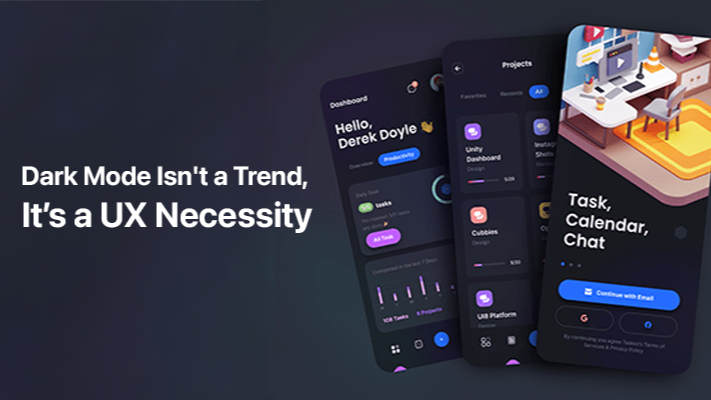
The Rise of Dark Mode: How It’s Changing the Way Users Experience Software
It’s in the ever-changing area of software design where, in the last couple of years, dark mode is a leading trend. From a feature that was once thought to be used by very few, dark mode has transitioned from a purely aesthetic preference to a core part of user experience design. Today, it is no longer just a matter of personal taste but an essential requirement for a large number of users. This blog will explore the rise of dark mode, its impact on UX design, and how it’s changing the way users interact with software applications across various platforms.
The Emergence of Dark Mode in Software
What is Dark Mode?
Dark mode is the display setting in which the backgrounds of software applications or websites come out with dark tones, typically in black or dark gray, with lighter text and elements contrasting against it. The feature has gained momentum in many digital environments, from OS to mobile applications and websites. Unlike the traditional light modes that usually use a bright background and dark text, dark mode inverts this, resulting in a soothing visual effect that is soft on the eyes when working under poor light conditions.
A Brief History of Dark Mode’s Popularity
Even though dark mode UX may feel like something new, it began in the roots of early computing. Computer screens were often filled with a dark background and green or amber text back in the 1980s, much like those old CRT monitors. Fast-forward several decades, and light-mode designs took center stage with the advancement of user interfaces. As people used smartphones for increasingly extended periods, the need for comfortable and unstraining options grew. Finally, in the 2010s, applications like Twitter, YouTube, and Instagram started unleashing dark modes, which led to their wide acceptance. The move to dark mode was strongly impelled by both high demand from users and growing concerns regarding screen time impacting eye health.
Why Dark Mode is Gaining Traction
The Benefits of Using Dark Mode
Perhaps the most obvious benefit of dark mode design is visual comfort. Many users say that less eye strain is involved when using dark mode, particularly during nighttime use. In addition, the soft contrast between text and background makes reading and browsing less fatiguing. Moreover, dark mode UX has been shown to enhance readability for users with certain kinds of visual impairments and for those sensitive to light.
Another benefit is its power-saving potential in the case of OLED screens, among others, which we will discuss later in the article. This energy-saving attribute makes this feature attractive to users who are concerned with maximizing their mobile device’s lifespan.
User Preferences and Trends
The demand for dark mode has gone through the roof as user preference continues to change. Over 80 percent of smartphone users prefer dark mode, as revealed by a survey conducted in 2020 due to a combination of aesthetics and comfort. As many apps and platforms are now using dark mode, users tend to require it rather than take it as an option.
Psychological Impact of Dark Mode
Besides the physical benefits, dark mode design has its psychological merits. For many users, applications with dark themes make them feel more relaxed and focused. A darker interface might provide an immersive atmosphere, letting users focus on the content more than when working with brighter interfaces. Besides, dark mode UX looks sleek, modern, and highly corresponds to minimalist design taste.
Dark Mode’s Impact on User Experience (UX)
How Dark Mode Enhances User Comfort
From a UX perspective, dark mode addresses two main concerns: reducing eye strain and improving visual comfort. Dark mode design shields from that aggressive glare of bright screens, especially in a low-light environment, contributing to the ability of users to interact with their device longer without fatigue. This is great for people who like staying up late reading, gaming, or watching videos.
Improved Visual Design in Software Applications
Another great plus of dark mode UX is that it offers designers new possibilities to experiment with contrast, colors, and elements. The use of dark mode presents a chance for modern design trends with a unique canvas on which to focus attention on particular features or call-to-action buttons through the use of vibrant accents, topped with minimalistic visuals. The result is a refined and stylish look; it really feels fresh and up to date.
The Role of Dark Mode in Reducing Eye Strain
Eye strain is a common affliction for anyone who spends extended amounts of time in front of screens. Long exposure to bright, white backgrounds contributes to discomfort, headaches, and even sleep disturbances. Dark mode gives the user a softer background, reducing the intensity of glare from screens. This is particularly beneficial for users with light sensitivity or astigmatism. For many users, this has alleviated these concerns, which has made dark mode essential in the world of UX design.
The Growing Popularity Across Different Platforms
Dark Mode in Mobile Apps
Dark mode found its large-scale introduction first in the form of mobile applications. The feature to switch to dark mode is being widely implemented on social media apps, from Facebook to WhatsApp, and on productivity apps. Since smartphones are often used at low-light intensities, the dark mode serves as an ideal feature that fits into the concept of the mobile user experience.
The Rise of Dark Mode in Desktop Applications
After the success of mobile dark mode, desktop applications such as Slack, Microsoft Office, and most of Adobe Creative Cloud products introduced dark mode options. In a larger screen, dark mode UX reduces the contrast between a bright screen and the surrounding environment to create a more pleasant, focused experience for users.
Web Browsers and Websites Using Dark Mode
Browsers such as Google Chrome, Mozilla Firefox, and Microsoft Edge have introduced dark mode options whereby users can apply the theme to the browser user interface. News outlets, online forums, and digital media streaming sites also try to implement a dark mode option as a way to enhance UX and attract tech-savvy users.
Dark Mode and Battery Life: The Impact on Mobile Devices
OLED Screens and Power Efficiency
One of the main reasons using dark mode is so important on mobile devices has to do with battery life. Devices with OLED screens tend to have reduced power consumption when on-screen colors are darker. In an OLED screen, each pixel emits its own light; thus, when the background is black, fewer pixels light up, which leads to the saving of power.
How Dark Mode Can Help Extend Battery Life
For those who want to save the battery life of their devices, switching to dark mode is quite effective in prolonging the usability of their devices. In fact, studies have shown that up to 60% of battery life can be saved on OLED-equipped smartphones when dark mode is enabled, pending usage patterns. The energy-saving feature makes dark mode design quite attractive to power-conscious users.
Challenges and Considerations with Dark Mode Design
The Difficulty of Maintaining Readability
While there are many advantages of dark mode, dark mode design comes with its own challenges. Probably the most significant issue related to that is maintaining readability. Text, when in dark mode, can sometimes appear blurry or difficult to read if the contrast isn’t optimized. Designers will have to carefully choose fonts, colors, and other design elements so that the content is readable yet fits the dark aesthetic.
Accessibility Concerns: Ensuring Inclusion
Another challenge with dark mode UX is accessibility. While it may be a solution for most users, it may not be for all. Some individuals with visual disabilities may find the dark text against a dark background even more difficult to read compared to light text on a light surface. Thus, designers have to keep in mind the aspect of inclusivity when it comes to dark mode and give options to users to switch between light and dark themes based on their preference.
Designing for Different Screen Types
Besides being readable, dark mode design has to consider varied screen types and sizes: what looks great on small smartphone screens does not always look as great on the larger desktop monitor or laptop. This demands that designers test and optimize dark mode across a wide range of devices for consistency in user experience.
SEO and Dark Mode: A New Perspective
How Dark Mode Affects SEO and User Engagement
Increasing use of dark mode UX may also impact SEO. While the nature of SEO itself does not change, design and functionality in dark mode could impact the way users use sites. For instance, users might remain on a website longer if it offers a dark mode option; this could signal to search engines that the site is providing a positive user experience, perhaps improving rankings.
Strategies for Optimizing Your Website for Dark Mode Users
Web designers should implement strategies to ensure that their websites are optimized for dark mode. This includes using CSS to detect dark mode preferences and adjusting colors accordingly, ensuring that all content is readable and visually appealing in both light and dark themes.
Future Trends: What’s Next for Dark Mode?
The Continued Evolution of Dark Mode in Software Design
As dark mode continues to gain more and more popularity, we can expect more advanced implementations, such as automatic switching depending on the time of day, location, or ambient light. This will definitely make dark mode even more intuitive and seamless for users, offering them personalization.
Predictions for Dark Mode in the Future of User Interfaces
In the future, dark mode design will be applied to a wide range of platforms, from VR applications to smart devices. As technology continues to evolve, it should be expected that dark mode usage will play an increasingly deeper role in users’ interactions with digital environments.
Conclusion
In the end, dark mode UX went from a ‘trendy’ design choice to a must-have feature impacting user comfort, visual design, and even battery life. Dark mode will have a critical role in shaping the future as it evolves. Whether you’re a user trying to seek comfort or a designer who’s optimizing your app for better engagement, dark mode’s here to stay, leaving its long-lasting impression on how we interact with digital platforms.
Frequently Asked Questions (FAQs)
Dark mode reduces eye strain, especially in low light, and improves battery life on OLED screens. It also offers a sleek, comfortable visual experience for users.
Dark mode enhances comfort and saves battery on OLED screens, but its impact on battery life is less on LCD screens. Readability can vary, and some users may find it harder to read.
Dark mode itself doesn’t directly impact SEO, but it can improve user engagement and satisfaction, which may indirectly boost rankings by increasing time spent on the site.