Flutter vs React vs Native Development: Comparison, Pros and Cons
In today’s fast-paced world of digital technologies, mobile applications are no longer an option but an obligation. Enterprises, startups, and developers come to this very crucial decision: the selection of the right technology in app development. Presently, there are many choices, and the debate goes down to Flutter vs React Native vs Native Development. Each technique has its own strengths, challenges, and ideal use cases. This article presents an in-depth comparison, ranging from performance to cost, along with pros and cons, to facilitate a better decision.
Introduction
Ten years ago, developing a mobile application required building different versions for iOS and Android; this, in turn, was time-consuming and rather expensive. Nowadays, with React Native and Flutter leading the charge of cross-platform frameworks, which offer an assurance of pace in development cycles along with a shared codebase, no compromise in performance is seen.
Choosing between different frameworks or approaches is crucial, not only for developers but also for the business that wants to deliver quality apps as quickly and efficiently as possible. Factors like performance, cost, scalability, community support, and trends in the future influence such decisions.
This blog covers Native Development, React Native, and Flutter, describing their features, benefits, and limitations, as well as their practical use cases.
What is Flutter?
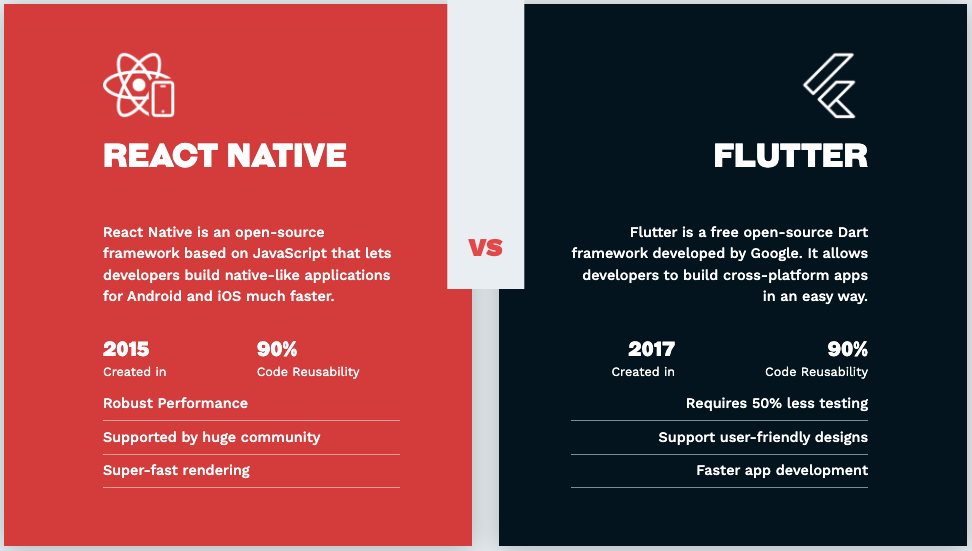
Flutter is an open-source UI toolkit from Google, introduced in 2017, used to build natively compiled applications for mobile, web, and desktop from a single codebase.
Key Features of Flutter
- Single codebase: for deployment on multiple platforms: Write once, deploy anywhere.
- Widget-based architecture: it enables consistency in UI/UX through already designed widgets.
- High Performance: The Flutter apps are compiled directly to native ARM code, ensuring near-native performance.
- Rich Animations and UI: Outstanding performance of a framework in smooth animations and expressive interfaces.
- Growing Community: Google’s backing ensures frequent updates, plugins, and extensive documentation.
Flutter continues to get widespread attention for startups and enterprises, developing visually appealing, high-performance cross-platform applications.
What is React Native?
React Native is an extremely popular cross-platform framework from Facebook. First made available in 2015, it provides developers with an opportunity to create code once with JavaScript and deploy it on both Android and iOS.
Key Features of React Native
- Cross-Platform Development: Share up to 90% of code between platforms and reduce development time.
- Hot Reloading: Enables developers to see changes instantly without needing to recompile the app.
- Strong Ecosystem: A vast number of libraries, plugins, and communities ease the process of developing an application.
- Native Modules: Features that require native performance can have custom native modules written in Swift, Kotlin, or Java by the developers.
React Native is suitable for apps in which faster development and cost-effectiveness are more important than pushing the boundaries of device performance.
What is Native App Development?
Native app development involves creating apps exclusively for a single platform, such as iOS or Android, by utilizing platform-specific languages and tools.
- iOS: Apps are developed using Swift or Objective-C in Xcode.
- Android: Apps are built using Kotlin or Java in Android Studio.
Key Features of Native Development
- High Performance: Native apps conduct direct communication with device hardware, thus providing faster execution and smooth performance.
- Access to Device Hardware: Native development creates the environment for easy access to device-specific features such as camera, GPS, sensors, and advanced graphics.
- UI/UX Flexibility: With this, the developers can create fully customized interfaces, considering platform guidelines and increasing the user experience.
Native development is considered the gold standard for applications that require high performance and complex functionalities, such as gaming applications or AR/VR apps.
Flutter vs React Native vs Native Development: Performance Comparison
Performance is the most important issue when selecting a development strategy. Let’s compare:
Speed and Responsiveness
Native: This is the fastest because it interacts directly with hardware.
Flutter: High-performance, nearly indistinguishable from native apps.
React Native: It’s a bit slower because of the JavaScript bridge, but sufficient for most applications.
App size and memory usage
Native: Minimal overhead, optimized to the platform.
Flutter: Larger application size due to the bundled framework and engine.
React Native: The app size of React Native is moderate, smaller than Flutter, but bigger than native.
Hardware Access and Integrations
Native: Full access to device APIs and SDKs.
Flutter: Great through plugins, but some advanced capabilities will only be available from native code.
React Native: Good support via third-party libraries, but some complex integrations may require native modules.
Pros and Cons of Flutter
Advantages
- High Performance: Your app is compiled directly to native code.
- Beautiful UI: Offers a lot of beautiful widgets and custom animations.
- Single Codebase: Saves time and money on development.
- Active Ecosystem: Large and rapidly growing community backed by Google.
Limitations
- Large App Size: Apps made with Flutter tend to be larger.
- Limited Third-Party Libraries: Some integrations may be hard to find and require custom work.
- Learning Curve: Developers will have to learn the Dart programming language.
Pros and Cons of React Native
Advantages
- Cross-Platform Efficiency: Companies are able to save time and money as one codebase works for multiple platforms.
- Community Support: A large community means more helpful libraries, more plugins, and more learning materials.
- Hot Reloading: Reloading an application instantly can cause the testing and development process to move much quicker.
- Integration with Native Code: React Native works well with native code enabling you to have many options when implementing complex features.
Limitations
- JavaScript Bridge Performance Overhead: A JavaScript Bridge can cause performance overhead, which can be an issue for heavy apps.
- UI Limitations: Extra effort may be required to deal with any platform-specific design nuances.
- Dependency on Third-Party Libraries: The application may depend on an external module if it is missing any essential features.
Pros and Cons of Native Development
Advantages
- Superior Performance: Perfect for graphics-intensive applications like gaming or AR/VR.
- Full Access to Device Features: Ensures seamless integration with hardware.
- Platform-specific UI: Provides the best possible user experience for each form factor, using the guidelines and standards appropriate to each platform.
Limitations
- Higher Development Cost: Different codebases are required for iOS and Android.
- Longer Development Time: Requires more resources and specialized developers.
- Maintenance Complexity: Updates must be implemented separately on both platforms.
Development Cost and Time Comparison
Learning Curve
- Native: Needs proficiency with platform-specific languages, such as Java, Kotlin, and Swift.
- React Native: JavaScript developers will find it easier to use.
- Flutter: Many developers may be unfamiliar with Dart.
Time to Market
- Native: Because of dual development, the longest.
- React Native: Shared codebase makes it faster.
- Flutter: For cross-platform apps with a lot of visual appeal, it is the fastest.
Cost of Development
- Native: Most expensive because of distinct teams.
- React Native: Moderate, uses fewer resources with a single codebase.
- Flutter: Moderate to low, particularly for cross-platform apps.
Community Support and Popularity
- Native: Requires platform-specific knowledge, mature ecosystems, and copious documentation.
- React Native: Active support and a vibrant community on forums, StackOverflow, and GitHub.
- Flutter: A rapidly expanding community with top-notch tutorials and resources supported by Google.
Best Use Cases for Each Technology
When to Select Native Development
- Apps with high performance (gaming, AR/VR)
- Applications that need sophisticated device integrations
- Enterprise apps with a long lifespan where dependability is essential
When to Select React Native
- MVPs and startups
- E-commerce apps or social media
- Apps that require moderate performance and fast updates
When to Select Flutter
- Applications with intricate and unique user interfaces
- Cross-platform web and mobile development
- Startups that are looking for affordable solutions without compromising the quality of the user interface
Future Trends in Mobile App Development
The creation of mobile apps is always changing. Important trends consist of:
- Cross-Platform Dominance: Because of their quicker development cycles, Flutter and React Native are becoming more and more popular.
- AI Integration: As AI-powered features become more and more integrated into apps, frameworks that facilitate quick experimentation are needed.
- Low-Code/No-Code Platforms: To enable quicker prototyping, these will supplement conventional coding techniques.
- Improved UI/UX: Frameworks like Flutter are appealing because users are expecting more interactive and aesthetically pleasing interfaces.
- Sustainable Development Practices: Apps that are optimized and use less energy will give you a competitive edge.
Conclusion
The final decision between Flutter, React Native, and Native Development depends on the objectives, financial constraints, and performance requirements of your project. For applications needing deep device integration, high performance, or highly specialized features, native development is still the best option. For companies and startups looking to develop apps fast and cheaply without sacrificing user experience, React Native is perfect. Flutter is a strong choice for projects that are visually complex or design-focused because it can produce stunning, reliable, and high-performing apps on a variety of platforms from a single codebase. By understanding the strengths, limitations, and best use cases of each approach, developers and organizations can choose the technology that aligns best with their long-term vision, ensuring a scalable, efficient, and user-friendly mobile app experience.
Frequently Asked Questions (FAQs)
Native development offers the best performance because it directly interacts with the device’s hardware and system APIs. Flutter comes very close, thanks to its compiled ARM code and smooth rendering engine. React Native performs well for most applications, but the JavaScript bridge can cause slight delays in heavy or animation-intensive apps.
Both Flutter and React Native are highly cost-effective because they allow cross-platform development from a single codebase. However, Flutter often reduces development time further due to its widget-based UI system and consistent design across platforms, making it a great option for budget-conscious startups looking to launch quickly.
You should choose native development when your app requires advanced hardware access, complex animations, high-end graphics, or platform-specific features that cross-platform tools may not fully support. Native development is also preferable for long-term enterprise applications where stability, performance, and scalability are critical.