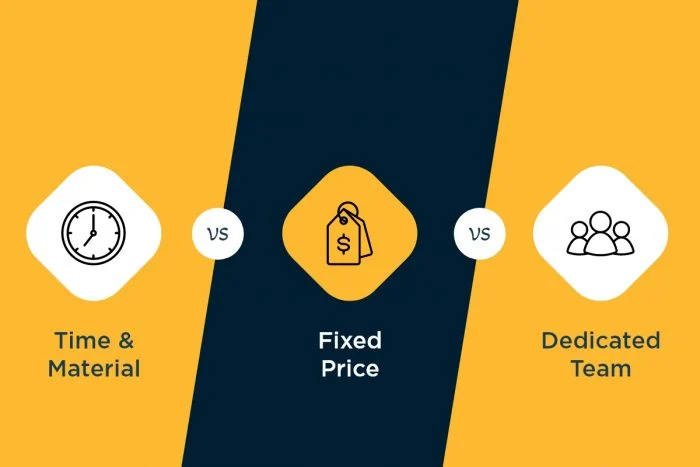
Fixed Price vs Hourly vs Dedicated Teams: Which Model Saves You Money?
Outsourcing has become a vital strategy for businesses seeking to reduce costs, increase efficiency, and focus resources on core operations. Among the crucial decisions that every company needs to make is the pricing model when outsourcing work. With multiple pricing models available, such as fixed price, hourly, and dedicated teams, a business must assess project needs, budgetary constraints, and long-term goals to determine which provides the best overall value. In this blog, we will go deep into the explanation of these three pricing models, compare their pros and cons, and analyze how they can help businesses save money.
Introduction
Outsourcing is a crucial strategy in today’s business, enabling organizations to optimize operations while cutting costs. Nonetheless, selecting the right cost-effective outsourcing model will significantly differ in the financial outcome of your project. A wrong choice may result in overspending, inefficiency, or delayed project timelines. Therefore, understanding the pros and cons of project pricing models is crucial for any business aiming to maximize benefits from its outsourcing efforts.
The best pricing model can save you money, but at the same time, it can also ensure the successful completion of the project within your timeframe. To get the best value, you must be aware of how these pricing models work and which one is suited to your business needs.
Understanding the Pricing Models
There are three major types of pricing models in outsourcing: fixed price, hourly, and dedicated teams. Each model has some unique advantages, depending on the project’s nature, the team’s experience, and the required flexibility. Let’s dive into each model.
Fixed Price Model
The most straightforward pricing option in outsourcing is the fixed-price model. In a fixed-price model, scope is agreed upon upfront, and price is fixed at the start. Both the client and the service provider know what to expect in terms of cost at the end, regardless of the hours spent or resources used.
Pros:
- Predictable Costs: The fixed-price model is ideal for projects with well-defined requirements and limited scope. You know exactly how much you’ll pay for the project.
- Risk-Free for Clients: Since the cost is pre-set, clients do not need to be concerned about additional charges or unexpected expenses.
- Clear Deadlines: This model typically has a fixed timeline for completion, meaning you know when it will be delivered.
Cons:
- Limited Flexibility: It can be challenging to negotiate additional costs if the project scope changes midway. Any changes could require a new contract or renegotiation.
- Lower Quality is Possible: Since practitioners may seek ways to fit within their budget, they may compromise on the quality of the final product.
- Unsuitable for Projects with Complexities: Fixed-price models may not be suitable when the project scope is not distinct or is likely to change during the development process.
Hourly Model
In the hourly model, the clients are charged for the actual time spent on a project. This model is suitable for projects that are dynamic in nature and whose scope or requirements may change at any point in time. Instead of fixed cost, clients are charged for hours worked by the outsourcing team.
Pros:
- Flexible and Scalable: The hourly model is perfect for projects when requirements are not fully defined or may change during the development process. You pay only for the actual time spent.
- Ideal for Ongoing Projects: If the project requires continuous updates or maintenance, an hourly model offers the necessary flexibility.
- Better Scope Control: Clients are billed for actual hours worked, giving them more control over the scope of work and allowing them to make changes.
Cons:
- Unpredictable costs: The total cost may spiral out of control once there is no clear scope, especially when the project takes longer than expected.
- Risk of Scope Creep: The flexibility of an hourly model can result in clients constantly requesting changes to either new tasks or changing project requirements, thereby increasing the project cost.
- Requires Active Management: on the part of the client, in terms of closely tracking hours worked to avoid surprises at bill time.
Dedicated Teams Model
A dedicated team is a hybrid pricing model that blends elements of both fixed-price and hourly models. In this model, a business hires an entire team of professionals to work exclusively on its project. Under this model, the dedicated team works under the guidance of the client for continuous support, development, and consultation.
Pros:
- Long-term Investment: This model is best for long-term projects that involve continuous work. The dedicated team becomes a part of your business and may assist in scaling the project.
- Full Control and Flexibility: You can manage the team as if they were your own employees. You have more control over the project, its direction, and the workload of your team.
- Highly Scalable: You can easily scale the team up or down based on the project’s needs. This makes it an ideal model for projects that evolve.
Cons:
- Higher Initial Investment: Although the upfront investment can be higher than either the hourly or fixed-price model, the dedicated teams model may yield long-term cost savings in ongoing projects.
- Strong Communication: It is essential when one works in a dedicated team that may also be distributed remotely.
- More Management Effort: Since you’re working with a full team, there is more day-to-day management that needs to be performed to keep the project on course.
Cost Analysis: Comparing Models
The cost analysis for determining which model can provide more significant savings is vital when choosing the right model for your project. While each pricing model has its set of advantages, understanding which model best fits your needs is key to maximizing savings.
How the Fixed-Price Model Can Save You Money
If the project has well-defined requirements and its scope is small, then a fixed-price model is a great choice. Since this cost is pre-agreed, you won’t have to bear any hidden fees. It will be easier for you to manage your budget, and you can be assured that value is returned for the particular scope of a project. The downside of this model is that it does not allow much flexibility, and costs begin to increase if the project scope changes.
When the Hourly Model is More Economical
The hourly model is considered more cost-effective for outsourcing when the project is dynamic and likely to undergo frequent changes. If the scope of the project is vague or you anticipate updating it frequently, the structure of hourly billing gives flexibility to adjust the scope and timeline for the project. The downside, however, is the unpredictability of the costs involved, which could quickly rise if the project takes longer than initially anticipated.
Why Dedicated Teams Can Be the Ideal Long-Term Investment
While the dedicated teams model might seem costly upfront, it may offer substantial long-term savings, especially for businesses that require continuous development and support. Dedicated teams are well-suited for ongoing or evolving projects requiring long-term maintenance. The model offers a high level of control, flexibility, and scalability, making it an excellent option for businesses that want to develop complex, scalable solutions over time.
Factors That Influence Cost-Effectiveness
Various factors, including project complexity, timeline, flexibility, and risk, are influenced by each pricing model
- Project Complexity and Scope: Complex projects may be more suited to fixed-price or hourly models, depending on their ability to adapt to changes. Simpler projects may benefit from the predictability of a fixed-price model.
- Project Duration: Short-term projects often work well on a fixed-price or hourly model, while long-term projects work best with a dedicated team.
- Flexibility and Scalability: Projects that require frequent changes or scaling will enjoy the flexibility of either hourly or dedicated team models.
- Risk Factors: Fixed-price models work best when risk and uncertainty are low; hourly and dedicated team models are better suited for projects when these factors are higher.
Which Model Is Best for Your Project?
The choice of the best pricing model for your project depends on several factors, including the project’s complexity, timeline, and flexibility needs. Here’s how to decide:
- Short-Term Projects: If your project is small with clearly defined objectives set within a specific timeline, the fixed-price model could be your best fit.
- Continuous or Long-term Projects: When the projects involve frequently updated versions or require long-term support, the model of dedicated teams is more appropriate.
- Projects with Unclear Requirements: If your project scope is likely to change or evolve, the hourly model offers the most flexibility.
Advantages and Disadvantages of Each Model
Each of them comes with its strengths and weaknesses, and understanding the benefits and drawbacks may help to identify the best option for your particular project.
Fixed Price:
Pros: Predictable cost, clear timeline, and no surprises.
Cons: Inflexibility; if the scope changes, quality can be lower.
Hourly:
Pros: flexibility, scalability, ideal for ongoing work.
Cons: include unpredictable costs, scope creep, and the need for active management.
Dedicated Teams:
Pros: full control, scalability, and long-term investment.
Cons: Higher upfront cost, strong communication and management are required.
How to Maximize Savings with the Right Model
Regardless of the pricing model, there’s always a way to maximize savings and get value for your money.
For Fixed-Price Contracts: Clearly define the scope and requirements so as to avoid unnecessary changes, as that can add to the cost.
For Hourly Models, track the hours worked closely, establish expectations, and prioritize tasks so that costs stay in check.
To Dedicated Teams: Establish a strong rapport with the team by giving clear direction and managing the project properly to ensure its long-term efficiency.
Key Takeaways: Final Thoughts
There is no universal solution for project pricing models. Each model offers a distinct advantage and will be suited to different types of projects. Clearly understanding the nuances of each model and selecting the right model based on your business needs will help you ensure the maximum level of cost-effective outsourcing for the success of your project.
Conclusion
Choosing the appropriate pricing model is thus crucial for the project’s success and cost-efficiency. Whether one chooses the fixed-price, hourly, or dedicated team model, it is essential to select the option that best suits the scope, timeline, and flexibility needs of your project. The fixed-price model is best suited for well-defined projects, while the hourly model will be quite flexible for emerging requirements, and the dedicated teams model fits best for long-term, complex projects.
A correctly chosen model can help organizations optimize outsourcing, control the costs, and assure successful project outcomes. Periodically reassessing your choice as the project develops can allow for adjustment to maintain the best value and efficiency.
Frequently Asked Questions (FAQs)
The most cost-effective model depends on the nature of your project. If the project scope is well-defined, a fixed-price model may offer the best cost predictability. For ongoing or flexible projects, the hourly model can provide the necessary adaptability. Dedicated teams are a long-term investment, ideal for complex projects that require continuous development.
In a fixed-price model, the scope is typically agreed upon up front. Any changes after the agreement may require renegotiation or a new contract, which can increase costs. If your project is likely to change during development, the hourly model or dedicated teams model may be better suited.
The hourly model can become more expensive than the fixed-price model if the project takes longer than anticipated to complete. Without clear timelines or scope, hourly rates can lead to unpredictable costs. However, for projects with unclear or evolving requirements, hourly billing offers flexibility that a fixed price cannot.