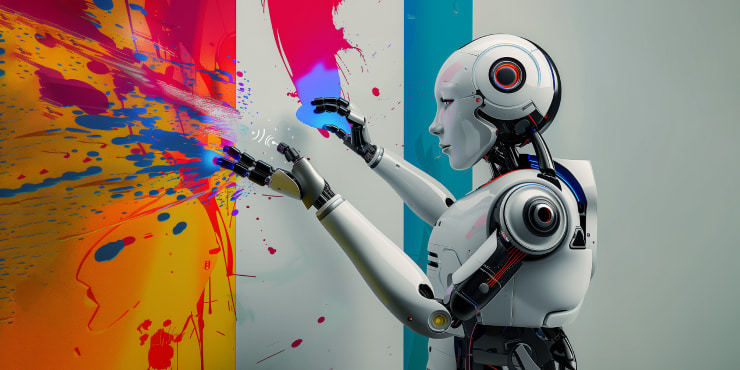
The Future of AI in Web Design: Automating Creative Processes
Over the last few years, Artificial Intelligence (AI) has left its footprint in most industries, and the web design industry is no exception. As companies compete to provide improved user experiences, AI has become a force to reckon with, revolutionizing website design, development, and maintenance. From automating mundane tasks to augmenting creativity, AI is revolutionizing the web design industry like never before.
Web design is important for establishing a strong online presence. In the present digital-first era, a site is usually the initial interface of interaction between the consumer and business. With that in mind, a website that is appealing and usable is not just an option but a requirement. Adding AI to web design means having the ability to automate processes, customize experiences, and elevate the quality of the design as a whole while saving time and expenses.
Understanding AI in Web Design: Key Concepts and Technologies
What is AI in the Context of Web Design?
AI in web design is the application of algorithms, machine learning, and data analytics to automate and improve different aspects of the design process. AI systems are programmed to learn from patterns and make data-based decisions, hence to perform tasks that were previously done by human designers.
AI Tools and Technologies Redesigning Web Design
Some of the artificial intelligence (AI) technologies and software transforming web design are:
- Machine Learning: Artificial intelligence can process huge amounts of user data to forecast trends, likes, and habits. It enables the design of websites that are more intuitive and user-friendly.
- Natural Language Processing (NLP): NLP enables AI to interpret and create human-readable language, which helps chatbots and content generators to engage users.
- Computer Vision: Computer vision-powered AI tools can automatically optimize and analyze images, color, and layout to make the design process efficient and faster.
AI-Driven Design vs. Traditional Web Design
Traditional web design involves plenty of manual effort, ranging from the selection of color palettes to the placement of elements on a page. Unlike AI-driven design, many of these processes can be automated by examining user behavior, preferences, and trends in data through AI analysis. Although AI contributes efficiency, the creative human touch and emotional appeal offered by human designers cannot be replicated.
How AI Is Automating Creative Processes in Web Design
AI is slowly automating most of the creative processes of web design, cutting down on the time and effort needed to deliver top-notch websites. Some examples of how AI is transforming the design process are listed below:
AI-Based Layout Design and Automation
One of the most labor-intensive activities in web development is the selection and positioning of layout components. AI-based software, including Wix’s ADI (Artificial Design Intelligence) and The Grid, applies machine learning to design layouts automatically according to user input, content, and goals. These programs are able to design unique layouts with optimal design elements such as positioning of text, image sizes, and color palettes with no need for human intervention.
AI-Powered Web Page Content Generation
Web page content is an integral part of any website. AI tools can help generate content with speed and efficiency. For example, AI-powered software such as Copy.ai and Jarvis (now Jasper) can generate engaging copy automatically for web pages, blog posts, product descriptions, and more. Based on keywords and the intent of users, AI can produce optimized SEO and engaging copy, freeing designers from precious time.
Personalized User Experiences with AI
Personalization is an important element in building a successful web design. AI makes it possible for designers to create individual experiences for various users based on their habits and interests. AI personalization can dynamically alter website content, images, and layouts according to user data. For instance, online shopping websites can suggest products based on a visitor’s browsing history or buying habits.
Benefits of AI in Web Design: Efficiency and Innovation
AI does not only involve task automation; it also has a tremendous positive impact on web design that contributes to efficiency, innovation, and creativity. Here’s a glimpse at some of the most important advantages of AI integration:
Faster Design Process with AI Tools
Artificial Intelligence has the potential to significantly accelerate the design process by mechanizing routine tasks like layout creation, content generation, and image resizing. This enables designers to concentrate on more creative and tactical functions of web design, resulting in improved project delivery time.
Cost-Effectiveness and Scalability
Artificial intelligence tools have the potential to minimize the requirement for a large number of designers, thus bringing down the cost of the web design process for enterprises. Furthermore, as AI tools improve, they provide scalable solutions that work both for small-scale businesses and large-scale businesses.
Creativity and Automation Combined
While AI can do the heavy work when it comes to repeating tasks, human designers contribute creativity, emotional intelligence, and aesthetic charm. With AI combined with human innovation, web design will be able to attain a perfect balance between efficiency and creativity.
The Role of AI in Accessibility and Inclusivity
AI is responsible for making websites more accessible and inclusive. AI solutions can automatically shift the design and content of a website to make it accessibility compliant, allowing users with disabilities to access the site without any issue. AI can also contribute towards language accessibility, such as real-time translation or voice-based interfaces.
Challenges and Limitations of AI in Web Design
Though it has numerous advantages, AI in web design has some challenges and limitations that need to be addressed:
Reliance on Quality Data
AI makes predictions and decisions based on data. If the data provided to an AI system is incorrect or biased, the results may be erroneous. In web design, this could result in subpar design choices that users don’t connect with.
Loss of Human Touch and Creativity
Whereas AI can be used to automate much of the design, it does not possess the creative and emotional intelligence that human designers have to offer. Designs created by AI might come off as sterile or process-like without the human input that injects personality and individuality.
Ethical Issues and Bias in AI Algorithms
AI programs are only as good as what they are trained on. If they are trained on biased data, they have the potential to continue discrimination or inequality. For instance, AI software used to automate content generation or layout creation might unknowingly perpetuate stereotypes or leave out particular groups.
How to Integrate AI in Your Web Design Workflow
Incorporating AI into your web design process can be easy, provided you select the proper tools and develop best practices:
Selecting the Appropriate AI Tools for Your Business
There are many AI-driven tools to use, each for a particular use in web design. Some of the best tools to consider are:
- Wix ADI: For creating website layouts automatically
- Copy.ai: For content generated by AI
- Adobe Sensei: For optimizing images and video
Best Practices for Implementing AI in Your Workflow
Begin by finding areas in your design workflow that can be automated, such as generating layouts, creating content, and A/B testing. Employ AI tools for these tasks, while you concentrate on the creative and strategic side of design.
Practical Steps for Web Designers and Agencies
For web designers, the secret to effective AI integration is to look at it as a tool that augments your skill set. Try out different AI tools, see how they fit into your processes, and make changes accordingly to make your workflow more efficient.
The Future of AI in Web Design: What’s Next?
As AI continues to develop, its function in web development will only become more profound. The following are some of the upcoming trends and forecasts for the future of AI in web development:
Emerging Trends and Technologies in AI
In the future, AI web design will continue to evolve with more advanced tools that can interpret and produce highly complex design aspects. More sophisticated AI personalization features, predictive design, and greater AI-generated content will be expected.
Predictions for the Evolution of AI in Web Design
Design software with the use of AI will also develop further in generating dynamic, responsive designs that respond to a user’s personal preferences. Further, with AI being more integrated into other technologies such as virtual reality (VR) and augmented reality (AR), web design will increasingly become more interactive and immersive.
The Potential for AI to Work with Human Designers
Instead of substituting human designers, AI will probably act as an interactive tool that amplifies imagination. AI will be used by human designers as a source of inspiration and assistance, but human designers will continue to be in control of the artistic and emotional elements of design.
Conslusion
AI has already started to transform the web design sector, providing an array of opportunities for innovation, efficiency, and creativity. AI is never going to completely substitute human designers, but it is a tool that can automate basic processes, personalize website content, and optimize user experience. Through the implementation of AI, web designers can achieve new levels of productivity and creativity, opening doors to the future of web design.
Frequently Asked Questions (FAQs)
Some of the best AI tools for web design include Wix ADI, Adobe Sensei, and Copy.ai. These tools can help automate various aspects of the design process, from layout creation to content generation.
While AI can automate many tasks, it cannot replace the creativity, emotional intelligence, and problem-solving abilities of human designers. AI is best used as a tool to complement human design skills.
AI can enhance user experience by personalizing website content based on user behavior, improving accessibility, and optimizing navigation and layout for different devices